Buy facepages.eu ?
We are moving the project
facepages.eu .
Are you interested in purchasing the domain
facepages.eu ?
domain@kv-gmbh.de · 0541-91531010
Buy facepages.eu ?
How do you solve compound quantifiers?
Compound quantifiers can be solved by breaking them down into simpler quantifiers and then applying the appropriate rules. For example, if the compound quantifier is "for every x, there exists a y such that...", you can first consider the "for every x" part and then the "there exists a y" part separately. This allows you to apply the rules for universal and existential quantifiers to solve the compound quantifier step by step. By breaking down the compound quantifier into simpler parts and applying the rules systematically, you can effectively solve compound quantifiers. **
How do universal and existential quantifiers describe and negate statements?
Universal quantifiers, denoted by the symbol ∀, are used to make a statement about all elements in a set. For example, the statement "∀x P(x)" means that the predicate P(x) is true for all elements x in the set. To negate a universally quantified statement, we use the symbol ¬ before the quantifier, so the negation of "∀x P(x)" would be "¬∀x P(x)", which is equivalent to "∃x ¬P(x)". On the other hand, existential quantifiers, denoted by the symbol ∃, are used to make a statement about at least one element in a set. For example, the statement "∃x P(x)" means that there exists at least one element x in the set for which the predicate P(x) is true. To negate an existentially quantified statement, we use the symbol ¬ before the quantifier, so the negation of "∃x **

Similar search terms for Quantifiers
Top-Angebote
Products related to Quantifiers:
-
Fourth Estate The List by Yomi Adegoke - Sunday Times Bestseller - Paperback - Contemporary Social Media ThrillerThe List by Yomi Adegoke is a contemporary fiction novel published by Fourth Estate. It's a gripping thriller about reputation, betrayal, and the dark side of social media. The story follows high-flying journalist Ola Olajide as her seemingly perfect life unravels a month before her wedding, when an anonymous list resurfaces online with devastating consequences for her and her fiancé. The novel explores themes of identity, relationships, and the power of social media. A rising career, a loving fiancé, and a wedding just weeks away - Ola's life is turned upside down when she and her fiancé wake to the same unsettling message: 'Oh my god, have you seen The List?' A viral, anonymous document naming men accused of sexual misconduct has resurfaced online - and Michael's name is on it. As the countdown to the wedding continues, Ola is forced to confront the dark secrets of her fiancé and the true nature of their relationship.3,99 £*Shipping: 2,99 £Secure redirect to the provider
-
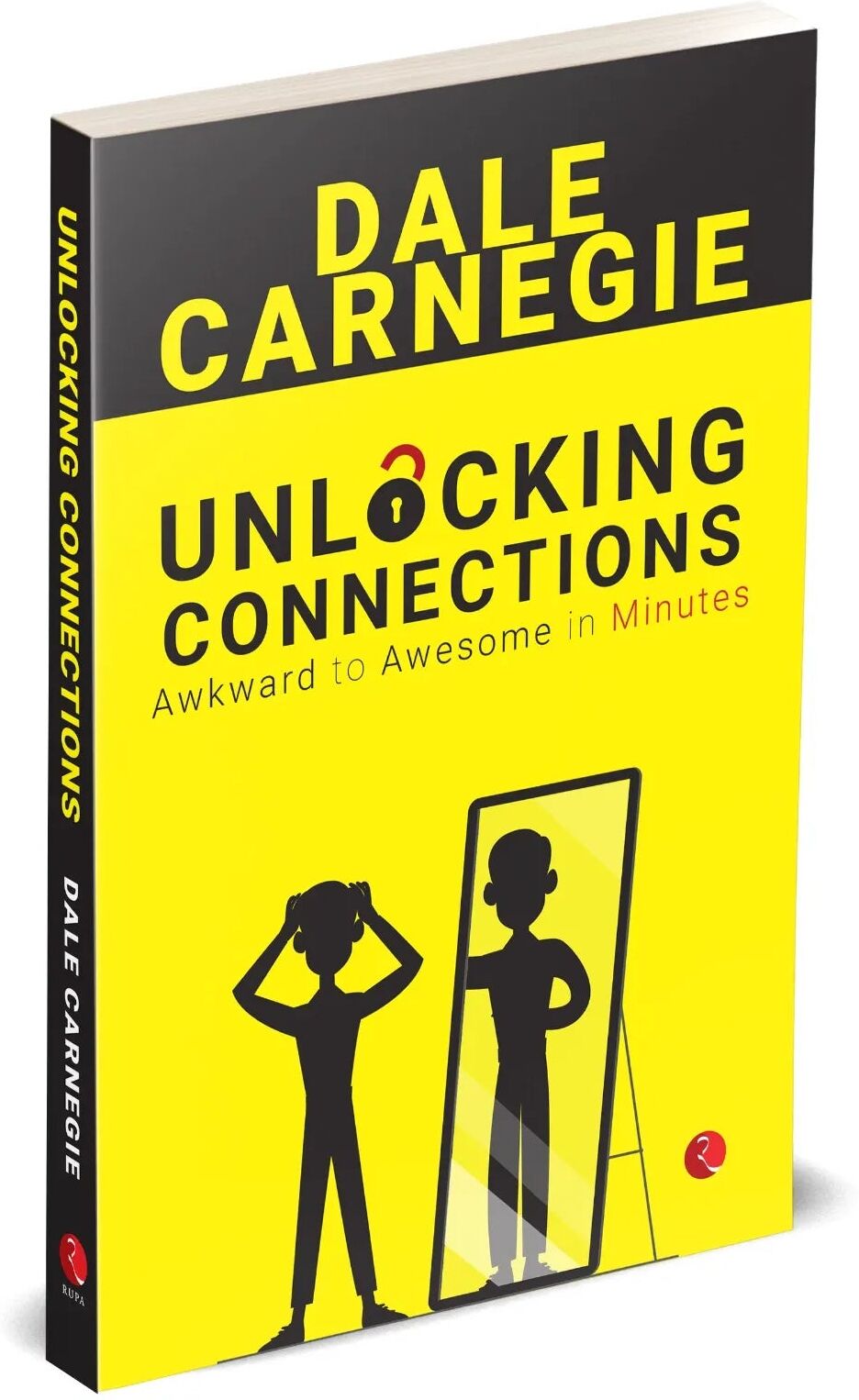
Rupa Publications India Unlocking Connections: Awkward to Awesome in Minutes by Dale Carnegie - Paperback Self-Help Book on Social Skills & Confidence - NewUnlocking Connections: Awkward to Awesome in Minutes is a practical self-help guide for anyone who finds social interactions daunting. Drawing on the enduring principles popularised by Dale Carnegie, this book breaks down the barriers that stop us forming genuine relationships, replacing awkwardness with confidence. Through clear, actionable advice, real-life case studies and simple exercises, readers are guided step by step towards more natural, meaningful conversations and lasting connections, both socially and professionally. Social interactions can feel like a minefield, but this book sets out to change that. It tackles the everyday hurdles that make conversations awkward, from misreading body language to freezing up in unfamiliar company. The book covers everything from understanding different personality types to overcoming phobias and building confidence in social situations.2,99 £*Shipping: 2,99 £Secure redirect to the provider
-
GE Profile™ GE Profile Opal Mini Nugget Ice MakerBuilt on the belief that modern life needs modern solutions, GE Profile Appliances are designed to make daily life simpler by incorporating Smart Home technology and cutting-edge features in every appliance.299,00 $*Shipping: 0,00 $Secure redirect to the provider
-
Multicon Wholesale Hub Quick Splicing Terminals, Compact Lever Wire Connectors, Safe Electrical Connections Quick Splicing Terminals, Compact Lever Wire Connectors, Safe Electrical ConnectionsCompact Lever Wire Connectors are the perfect solution for your electrical connection needs. Engineered with highquality materials, these connectors offer a reliable and efficient way to securely join wires without the need for specialized tools....55,97 $*Shipping: 0,00 $Secure redirect to the provider



-
What is the difference between social media and social networking?
Social media refers to online platforms that allow users to create and share content with a wide audience, while social networking specifically focuses on connecting and interacting with other users within a specific community or group. Social media platforms like Facebook, Twitter, and Instagram enable users to share content with a broad audience, whereas social networking sites like LinkedIn and Meetup are designed to facilitate connections and interactions between individuals with common interests or goals. In essence, social media is a broader term that encompasses various online platforms for sharing content, while social networking is more focused on building relationships and connections within a specific community. **
-
How do you describe and negate universal and existential quantifiers in statements?
Universal quantifiers, denoted by the symbol ∀, are used to make a statement about all elements in a set. For example, the statement "∀x, P(x)" means "For all x, P(x) is true." To negate a universal quantifier, we use the symbol ¬, so the negation of "∀x, P(x)" is "¬(∀x, P(x))," which can be rewritten as "∃x, ¬P(x)," meaning "There exists an x such that P(x) is false." Existential quantifiers, denoted by the symbol ∃, are used to make a statement about the existence of at least one element in a set. For example, the statement "∃x, P(x)" means "There exists an x such that P(x) is true." To negate an existential quantifier, we use the symbol ¬, so the negation of "∃x, P(x)" is **
-
How can I express the following statement using quantifiers or mathematical symbols?
The statement "All cats are mammals" can be expressed using quantifiers and mathematical symbols as ∀x (Cat(x) → Mammal(x)), where ∀x denotes "for all x", Cat(x) represents "x is a cat", Mammal(x) represents "x is a mammal", and the arrow → denotes "implies". This statement asserts that for every x, if x is a cat, then x is a mammal. **
-
What are the rules for negating mathematical statements using quantifiers and sets?
When negating a mathematical statement with quantifiers and sets, the following rules apply: 1. To negate a statement with a universal quantifier (∀), change it to an existential quantifier (∃) and vice versa. 2. When negating a statement involving sets, use the complement of the set to negate the original statement. 3. When negating a statement involving a logical connective (such as AND, OR), apply De Morgan's laws to distribute the negation over the connectives. **


Why is the majority of the social media community stupid?
It is not accurate or fair to label the majority of the social media community as "stupid." Social media is a diverse platform that includes a wide range of individuals with varying levels of knowledge, experience, and perspectives. It is important to approach social media with an open mind and engage in respectful and constructive conversations. It is also important to remember that everyone has something valuable to contribute, and it is not productive to dismiss the entire social media community as "stupid." **
Should an Instagram social media profile focus on only one topic?
It depends on the goals and objectives of the profile. If the goal is to build a strong and engaged community around a specific topic, then focusing on one topic can be beneficial. However, if the goal is to showcase a variety of interests and aspects of one's life, then a more diverse profile may be more appropriate. Ultimately, the decision should be based on the intended audience and the overall purpose of the profile. **
Top-Angebote
Products related to Quantifiers:
-
Headline James Acaster's Guide to Quitting Social MediaTHE SUNDAY TIMES BESTSELLERThis is a self-help book like no other. Because you are not helping yourself, James Acaster is helping you.In 2019, James quit all forms of social media - covering his phone in tar and driving it to a lock-up in Rhyl, before setting up home in a castle he'd built himself called Castle Anti-Net. But when the withdrawal symptoms hit him, he realised in order to stay clean he'd have to replace everything social media gave him with three-dimensional, real-life activities.Employing the help of a mysterious, wealthy benefactor named Clancy Dellahue, and an ever-growing gang of misfits (aka the Tangfastic Crew), James found ways to replace his online friends (he joined the scouts) and spy on his exes (climbing ropes, zip lines, fake moustache) as well as anonymously bullying strangers, seeing photos of everyone's dogs, getting public figures fired, arguing with everybody about everything, and so much more.His life is amazing and yours could be too if you buy JAMES ACASTER'S GUIDE TO QUITTING SOCIAL MEDIA, BEING THE BEST YOU YOU CAN BE AND SAVING YOURSELF FROM LONELINESS VOL. 1.15,99 £*Shipping: 2,99 £Secure redirect to the provider
-
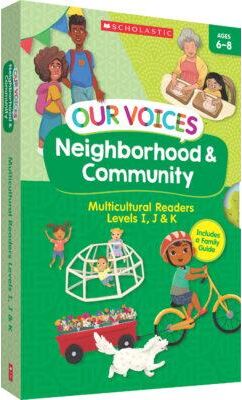
Our Voices: Neighborhood & Community Boxed SetFoster a feeling of belonging while building key reading skills with these colorful storybooks that spotlight a variety of neighborhoods and communities. The 10 charming stories feature characters from different cultural backgrounds who learn about...32,37 $*Shipping: 0,00 $Secure redirect to the provider
-
Fourth Estate The List by Yomi Adegoke - Sunday Times Bestseller - Paperback - Contemporary Social Media ThrillerThe List by Yomi Adegoke is a contemporary fiction novel published by Fourth Estate. It's a gripping thriller about reputation, betrayal, and the dark side of social media. The story follows high-flying journalist Ola Olajide as her seemingly perfect life unravels a month before her wedding, when an anonymous list resurfaces online with devastating consequences for her and her fiancé. The novel explores themes of identity, relationships, and the power of social media. A rising career, a loving fiancé, and a wedding just weeks away - Ola's life is turned upside down when she and her fiancé wake to the same unsettling message: 'Oh my god, have you seen The List?' A viral, anonymous document naming men accused of sexual misconduct has resurfaced online - and Michael's name is on it. As the countdown to the wedding continues, Ola is forced to confront the dark secrets of her fiancé and the true nature of their relationship.3,99 £*Shipping: 2,99 £Secure redirect to the provider
-
Rupa Publications India Unlocking Connections: Awkward to Awesome in Minutes by Dale Carnegie - Paperback Self-Help Book on Social Skills & Confidence - NewUnlocking Connections: Awkward to Awesome in Minutes is a practical self-help guide for anyone who finds social interactions daunting. Drawing on the enduring principles popularised by Dale Carnegie, this book breaks down the barriers that stop us forming genuine relationships, replacing awkwardness with confidence. Through clear, actionable advice, real-life case studies and simple exercises, readers are guided step by step towards more natural, meaningful conversations and lasting connections, both socially and professionally. Social interactions can feel like a minefield, but this book sets out to change that. It tackles the everyday hurdles that make conversations awkward, from misreading body language to freezing up in unfamiliar company. The book covers everything from understanding different personality types to overcoming phobias and building confidence in social situations.2,99 £*Shipping: 2,99 £Secure redirect to the provider
-
How do you solve compound quantifiers?
Compound quantifiers can be solved by breaking them down into simpler quantifiers and then applying the appropriate rules. For example, if the compound quantifier is "for every x, there exists a y such that...", you can first consider the "for every x" part and then the "there exists a y" part separately. This allows you to apply the rules for universal and existential quantifiers to solve the compound quantifier step by step. By breaking down the compound quantifier into simpler parts and applying the rules systematically, you can effectively solve compound quantifiers. **
-
How do universal and existential quantifiers describe and negate statements?
Universal quantifiers, denoted by the symbol ∀, are used to make a statement about all elements in a set. For example, the statement "∀x P(x)" means that the predicate P(x) is true for all elements x in the set. To negate a universally quantified statement, we use the symbol ¬ before the quantifier, so the negation of "∀x P(x)" would be "¬∀x P(x)", which is equivalent to "∃x ¬P(x)". On the other hand, existential quantifiers, denoted by the symbol ∃, are used to make a statement about at least one element in a set. For example, the statement "∃x P(x)" means that there exists at least one element x in the set for which the predicate P(x) is true. To negate an existentially quantified statement, we use the symbol ¬ before the quantifier, so the negation of "∃x **
-
What is the difference between social media and social networking?
Social media refers to online platforms that allow users to create and share content with a wide audience, while social networking specifically focuses on connecting and interacting with other users within a specific community or group. Social media platforms like Facebook, Twitter, and Instagram enable users to share content with a broad audience, whereas social networking sites like LinkedIn and Meetup are designed to facilitate connections and interactions between individuals with common interests or goals. In essence, social media is a broader term that encompasses various online platforms for sharing content, while social networking is more focused on building relationships and connections within a specific community. **
-
How do you describe and negate universal and existential quantifiers in statements?
Universal quantifiers, denoted by the symbol ∀, are used to make a statement about all elements in a set. For example, the statement "∀x, P(x)" means "For all x, P(x) is true." To negate a universal quantifier, we use the symbol ¬, so the negation of "∀x, P(x)" is "¬(∀x, P(x))," which can be rewritten as "∃x, ¬P(x)," meaning "There exists an x such that P(x) is false." Existential quantifiers, denoted by the symbol ∃, are used to make a statement about the existence of at least one element in a set. For example, the statement "∃x, P(x)" means "There exists an x such that P(x) is true." To negate an existential quantifier, we use the symbol ¬, so the negation of "∃x, P(x)" is **
Similar search terms for Quantifiers
-
GE Profile™ GE Profile Opal Mini Nugget Ice MakerBuilt on the belief that modern life needs modern solutions, GE Profile Appliances are designed to make daily life simpler by incorporating Smart Home technology and cutting-edge features in every appliance.299,00 $*Shipping: 0,00 $Secure redirect to the provider
-
Multicon Wholesale Hub Quick Splicing Terminals, Compact Lever Wire Connectors, Safe Electrical Connections Quick Splicing Terminals, Compact Lever Wire Connectors, Safe Electrical ConnectionsCompact Lever Wire Connectors are the perfect solution for your electrical connection needs. Engineered with highquality materials, these connectors offer a reliable and efficient way to securely join wires without the need for specialized tools....55,97 $*Shipping: 0,00 $Secure redirect to the provider
-
All Categories Goods PVC Insert Tee Plastic Insert Fitting For Barbed Pipe Connections PVC Insert Tee Plastic Insert Fitting For Barbed Pipe ConnectionsIf you're a DIY enthusiast or a professional in need of a reliable solution for connecting PVC pipes, this 1 pc of PVC Insert Tee is designed just for you. Made from highquality, durable PVC material, it provides a secure and leakproof connection...39,97 $*Shipping: 0,00 $Secure redirect to the provider
-
Drop Dash Deals Waterproof Electrical Wire Cable Snap Connectors For Secure, Reliable Connections Waterproof Electrical Wire Cable Snap Connectors For Secure, Reliable ConnectionsLooking for a simple, efficient solution to keep your electrical connections secure These 50 pcs Waterproof Electrical Wire Cable Snap Connectors are designed for easy, reliable use in various electrical installations. Made with durable,...49,97 $*Shipping: 0,00 $Secure redirect to the provider
-
How can I express the following statement using quantifiers or mathematical symbols?
The statement "All cats are mammals" can be expressed using quantifiers and mathematical symbols as ∀x (Cat(x) → Mammal(x)), where ∀x denotes "for all x", Cat(x) represents "x is a cat", Mammal(x) represents "x is a mammal", and the arrow → denotes "implies". This statement asserts that for every x, if x is a cat, then x is a mammal. **
-
What are the rules for negating mathematical statements using quantifiers and sets?
When negating a mathematical statement with quantifiers and sets, the following rules apply: 1. To negate a statement with a universal quantifier (∀), change it to an existential quantifier (∃) and vice versa. 2. When negating a statement involving sets, use the complement of the set to negate the original statement. 3. When negating a statement involving a logical connective (such as AND, OR), apply De Morgan's laws to distribute the negation over the connectives. **
-
Why is the majority of the social media community stupid?
It is not accurate or fair to label the majority of the social media community as "stupid." Social media is a diverse platform that includes a wide range of individuals with varying levels of knowledge, experience, and perspectives. It is important to approach social media with an open mind and engage in respectful and constructive conversations. It is also important to remember that everyone has something valuable to contribute, and it is not productive to dismiss the entire social media community as "stupid." **
-
Should an Instagram social media profile focus on only one topic?
It depends on the goals and objectives of the profile. If the goal is to build a strong and engaged community around a specific topic, then focusing on one topic can be beneficial. However, if the goal is to showcase a variety of interests and aspects of one's life, then a more diverse profile may be more appropriate. Ultimately, the decision should be based on the intended audience and the overall purpose of the profile. **
* All prices are inclusive of VAT and, if applicable, plus shipping costs. The offer information is based on the details provided by the respective shop and is updated through automated processes. Real-time updates do not occur, so deviations can occur in individual cases. ** Note: Parts of this content were created by AI.