Buy facepages.eu ?
We are moving the project
facepages.eu .
Are you interested in purchasing the domain
facepages.eu ?
domain@kv-gmbh.de · 0541-91531010
Buy facepages.eu ?
Is it competitive or non-competitive inhibition?
It is non-competitive inhibition. This is because the inhibitor binds to an allosteric site on the enzyme, which is different from the active site where the substrate binds. This type of inhibition does not compete with the substrate for binding to the enzyme, hence the name non-competitive inhibition. **
Non-competitive inhibition, right?
Non-competitive inhibition is a type of enzyme inhibition where the inhibitor binds to a site on the enzyme that is not the active site. This binding causes a conformational change in the enzyme, making it less effective at catalyzing the reaction. Non-competitive inhibitors do not compete with the substrate for binding to the enzyme. Instead, they can bind to the enzyme-substrate complex or to a separate allosteric site on the enzyme. **


Similar search terms for Non-competitive
Top-Angebote
Products related to Non-competitive:
-
Sanctuary: Lands of Dusk Competitive Card Game by Tabula GamesEnter the dark and mysterious world of Elnerth in Sanctuary: Lands of Dusk, a competitive hand-management card game for players who want to outwit an opposing Keeper. Each player chooses a Faction and uses its distinctive abilities to build a strategy around the powerful Essences flowing through the world. The aim is to destroy every Sanctuary controlled by your opponent while protecting your own position and managing the cards available to you. This set introduces three Factions—Kras, Molran, and Wul—each bringing different characteristics and tactical possibilities to the game. Select a Faction, develop your plans, and compete to become the last Keeper able to shape Elnerth's fate. This product includes the three Factions from the Lands of Dusk setting, and is designed for head-to-head strategic play. Please check the product packaging for the complete contents and play requirements.16,59 £*Shipping: 3,95 £Secure redirect to the provider
-
Invasion: Competitive Tactical Board Game for 2-4 Players by Lautapelit.fiInvasion is a competitive urban tactical combat board game designed for 2–4 players. Set in a desolate suburban district of Annapolis, the game pits two opposing factions—the Alien forces and the Resistance—against each other in a tense struggle for control. Inspired by classic computer games such as X-COM: UFO Defense and Laser Squad, each mission challenges players to plan carefully, manage their forces, and respond to changing battlefield conditions. The game combines strategic decision-making with direct combat as players attempt to complete their objectives against an opposing faction. Invasion is a game that requires confrontation, tactical planning, and scenario-driven gameplay, making it suitable for players who enjoy tabletop games with a competitive edge.33,79 £*Shipping: 3,95 £Secure redirect to the provider
-
Ahoy Competitive Strategy Game by Leder Games for 1-4 PlayersAhoy is a competitive strategy game for aspiring swashbucklers and soldiers. Players lead distinct factions, each with its own abilities and approach to exploration, trade, and control. During each round, roll and place dice to select actions for your faction. Expand your influence across regions, deliver valuable cargo, and build your reputation as you compete for fame. The player with the most fame at the end wins. With asymmetric factions and changing action choices, Ahoy offers a strategic high-seas contest for players who enjoy tactical decisions, area control, and resource delivery.33,09 £*Shipping: 3,95 £Secure redirect to the provider
-
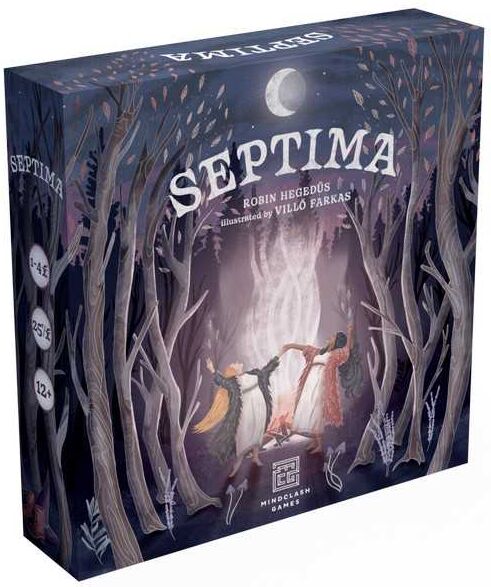
Septima Competitive Strategy Board Game by Mindclash Games, for 1-4 PlayersSeptima is a competitive strategy board game set in a superstitious town where rival covens compete to succeed Septima, the High Witch. Players lead a coven of witches through four seasons, each made up of five rounds. During the game, you can gather ingredients, brew potions, perform rituals, heal afflicted townspeople, and work covertly to influence the town's opinion. Septima combines strategic planning with direct player interaction. Build and develop your coven, manage your available resources, and decide when to take actions that increase wisdom while improving acceptance among the townspeople. The winner is the player who earns the most wisdom and proves their coven worthy of becoming Septima's successor. This substantial boxed tabletop product is designed for strategic game sessions.52,69 £*Shipping: 0,00 £Secure redirect to the provider



-
What is the difference between competitive and non-competitive inhibition?
Competitive inhibition occurs when a molecule competes with the substrate for the active site of the enzyme, thus reducing the enzyme's ability to bind with the substrate. Non-competitive inhibition, on the other hand, occurs when a molecule binds to a site on the enzyme other than the active site, causing a conformational change in the enzyme that reduces its activity. In competitive inhibition, increasing the substrate concentration can overcome the inhibition, while in non-competitive inhibition, increasing the substrate concentration does not alleviate the inhibition. **
-
Is non-competitive inhibition irreversible or reversible?
Non-competitive inhibition is a type of enzyme inhibition that is reversible. In non-competitive inhibition, the inhibitor binds to the enzyme at a site other than the active site, causing a conformational change in the enzyme that reduces its activity. This type of inhibition can be overcome by increasing the substrate concentration, as it does not involve permanent alteration of the enzyme. **
-
What is an example of non-competitive inhibition?
An example of non-competitive inhibition is the binding of an allosteric inhibitor to an enzyme at a site other than the active site. This binding causes a conformational change in the enzyme, which reduces its activity and prevents the substrate from binding to the active site. This type of inhibition does not compete with the substrate for binding to the active site, hence the term "non-competitive." An example of this is the binding of ATP to the enzyme phosphofructokinase in glycolysis, which inhibits its activity. **
-
Can you give me an example of competitive and non-competitive inhibition in biology?
Sure! In competitive inhibition, a molecule similar in structure to the substrate competes with the substrate for the active site of the enzyme. This prevents the substrate from binding to the enzyme and carrying out its normal function. An example of this is the drug statins, which competitively inhibit the enzyme HMG-CoA reductase, involved in cholesterol synthesis. In non-competitive inhibition, a molecule binds to the enzyme at a location other than the active site, causing a conformational change in the enzyme that reduces its activity. An example of this is the poison cyanide, which non-competitively inhibits the enzyme cytochrome c oxidase in the electron transport chain, disrupting cellular respiration. **
Is allosteric inhibition the same as non-competitive inhibition?
Allosteric inhibition and non-competitive inhibition are not the same, although they are related. Non-competitive inhibition refers to the binding of an inhibitor to a site on the enzyme that is not the active site, thereby preventing the substrate from binding to the active site. Allosteric inhibition, on the other hand, occurs when an inhibitor binds to a site on the enzyme that is distinct from the active site, causing a conformational change in the enzyme that reduces its activity. While both types of inhibition involve the binding of an inhibitor to a site other than the active site, allosteric inhibition specifically involves a change in the enzyme's shape and activity. **
What is the difference between non-competitive and allosteric inhibition?
Non-competitive inhibition occurs when an inhibitor binds to an enzyme at a site other than the active site, causing a conformational change that prevents the substrate from binding. This type of inhibition is not affected by the concentration of the substrate. On the other hand, allosteric inhibition occurs when an inhibitor binds to an allosteric site on the enzyme, causing a conformational change that reduces the enzyme's activity. Allosteric inhibition is often reversible and can be overcome by increasing the concentration of the substrate. **
Top-Angebote
Products related to Non-competitive:
-
Fantasy Brewers Competitive Strategy Board Game by Grail GamesImmerse yourself in the world of Fantasy Brewers, a competitive strategy game where you take on the role of a dwarven Brewmaster. Set during the build-up to the Orctober BeerFest, each player develops a brewery, manages a farm, and directs a team of workers to create the most successful drinks. Players place workers to carry out actions, adapt their plans as they buy and sell goods, brew beer, distill whisky, and improve their facilities. Resources must be managed carefully, with opportunities to extend the brewery, recruit additional helpers, and decorate for the approaching festival. The game is won by earning Victory Points through brewery decisions and festival preparations. The player with the most Victory Points at the end wins the Golden Stein and the title of champion brewer. This game combines resource management and economic decision-making with a unique theme, making it a great addition to any board game collection.31,59 £*Shipping: 3,95 £Secure redirect to the provider
-
Sanctuary: Lands of Dawn Competitive Card Game by Tabula GamesEnter the world of Elnerth in Sanctuary: Lands of Dawn, a competitive hand-management card game for players who want to lead a powerful faction into battle. Designed by Leonardo Romano, the game casts players as Keepers competing to shape the fate of the world. According to the legends of Elnerth, a dangerous mystical energy was divided into six Essences to prevent catastrophe. Sanctuaries allow this power to be channeled, but rival Keepers stand in the way. Build your strategy around your chosen faction and work towards destroying every opposing Sanctuary. This set introduces three factions from Sanctuary: Thannen, Antar, and Ganto. Each faction brings its own character and strategic possibilities, giving players different ways to approach the contest. The game includes hand-management gameplay focused on tactical decisions.16,59 £*Shipping: 3,95 £Secure redirect to the provider
-
Sanctuary: Lands of Dusk Competitive Card Game by Tabula GamesEnter the dark and mysterious world of Elnerth in Sanctuary: Lands of Dusk, a competitive hand-management card game for players who want to outwit an opposing Keeper. Each player chooses a Faction and uses its distinctive abilities to build a strategy around the powerful Essences flowing through the world. The aim is to destroy every Sanctuary controlled by your opponent while protecting your own position and managing the cards available to you. This set introduces three Factions—Kras, Molran, and Wul—each bringing different characteristics and tactical possibilities to the game. Select a Faction, develop your plans, and compete to become the last Keeper able to shape Elnerth's fate. This product includes the three Factions from the Lands of Dusk setting, and is designed for head-to-head strategic play. Please check the product packaging for the complete contents and play requirements.16,59 £*Shipping: 3,95 £Secure redirect to the provider
-
Invasion: Competitive Tactical Board Game for 2-4 Players by Lautapelit.fiInvasion is a competitive urban tactical combat board game designed for 2–4 players. Set in a desolate suburban district of Annapolis, the game pits two opposing factions—the Alien forces and the Resistance—against each other in a tense struggle for control. Inspired by classic computer games such as X-COM: UFO Defense and Laser Squad, each mission challenges players to plan carefully, manage their forces, and respond to changing battlefield conditions. The game combines strategic decision-making with direct combat as players attempt to complete their objectives against an opposing faction. Invasion is a game that requires confrontation, tactical planning, and scenario-driven gameplay, making it suitable for players who enjoy tabletop games with a competitive edge.33,79 £*Shipping: 3,95 £Secure redirect to the provider
-
Is it competitive or non-competitive inhibition?
It is non-competitive inhibition. This is because the inhibitor binds to an allosteric site on the enzyme, which is different from the active site where the substrate binds. This type of inhibition does not compete with the substrate for binding to the enzyme, hence the name non-competitive inhibition. **
-
Non-competitive inhibition, right?
Non-competitive inhibition is a type of enzyme inhibition where the inhibitor binds to a site on the enzyme that is not the active site. This binding causes a conformational change in the enzyme, making it less effective at catalyzing the reaction. Non-competitive inhibitors do not compete with the substrate for binding to the enzyme. Instead, they can bind to the enzyme-substrate complex or to a separate allosteric site on the enzyme. **
-
What is the difference between competitive and non-competitive inhibition?
Competitive inhibition occurs when a molecule competes with the substrate for the active site of the enzyme, thus reducing the enzyme's ability to bind with the substrate. Non-competitive inhibition, on the other hand, occurs when a molecule binds to a site on the enzyme other than the active site, causing a conformational change in the enzyme that reduces its activity. In competitive inhibition, increasing the substrate concentration can overcome the inhibition, while in non-competitive inhibition, increasing the substrate concentration does not alleviate the inhibition. **
-
Is non-competitive inhibition irreversible or reversible?
Non-competitive inhibition is a type of enzyme inhibition that is reversible. In non-competitive inhibition, the inhibitor binds to the enzyme at a site other than the active site, causing a conformational change in the enzyme that reduces its activity. This type of inhibition can be overcome by increasing the substrate concentration, as it does not involve permanent alteration of the enzyme. **
Similar search terms for Non-competitive
-
Ahoy Competitive Strategy Game by Leder Games for 1-4 PlayersAhoy is a competitive strategy game for aspiring swashbucklers and soldiers. Players lead distinct factions, each with its own abilities and approach to exploration, trade, and control. During each round, roll and place dice to select actions for your faction. Expand your influence across regions, deliver valuable cargo, and build your reputation as you compete for fame. The player with the most fame at the end wins. With asymmetric factions and changing action choices, Ahoy offers a strategic high-seas contest for players who enjoy tactical decisions, area control, and resource delivery.33,09 £*Shipping: 3,95 £Secure redirect to the provider
-
Septima Competitive Strategy Board Game by Mindclash Games, for 1-4 PlayersSeptima is a competitive strategy board game set in a superstitious town where rival covens compete to succeed Septima, the High Witch. Players lead a coven of witches through four seasons, each made up of five rounds. During the game, you can gather ingredients, brew potions, perform rituals, heal afflicted townspeople, and work covertly to influence the town's opinion. Septima combines strategic planning with direct player interaction. Build and develop your coven, manage your available resources, and decide when to take actions that increase wisdom while improving acceptance among the townspeople. The winner is the player who earns the most wisdom and proves their coven worthy of becoming Septima's successor. This substantial boxed tabletop product is designed for strategic game sessions.52,69 £*Shipping: 0,00 £Secure redirect to the provider
-
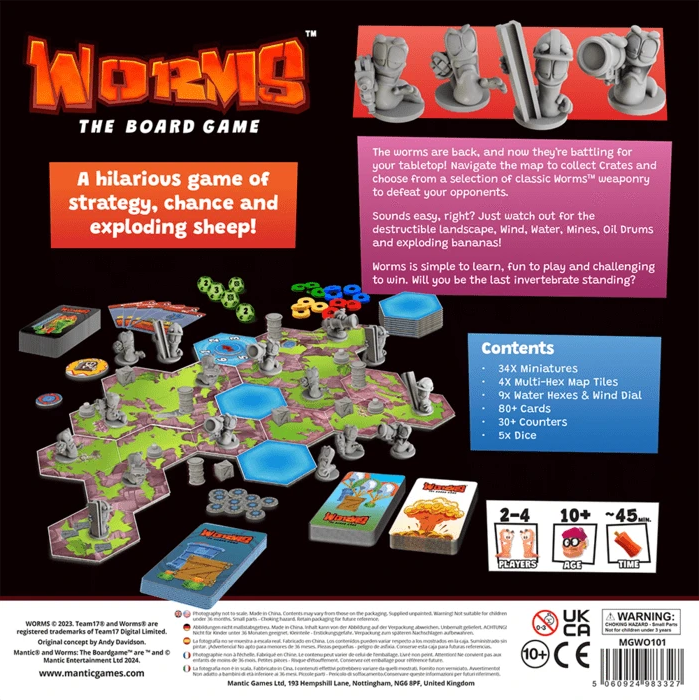
Worms: The Board Game - Competitive Strategy Game, Ages 8+, by Mantic GamesBring the chaotic tactics and humour of the Worms video game series to the tabletop with Worms: The Board Game. Players command teams of Worms across a hex-based battlefield, gathering crates, avoiding mines, and choosing the right weapons to outmanoeuvre their opponents. Plan your movements carefully, use the terrain to your advantage, and try to keep your team in action while reducing the opposing forces. The combination of tactical decisions, luck, and explosive surprises creates an entertaining experience for family game nights and groups of friends. This game is designed for competitive tabletop play and is a great addition to any collection of board games.39,29 £*Shipping: 3,95 £Secure redirect to the provider
-
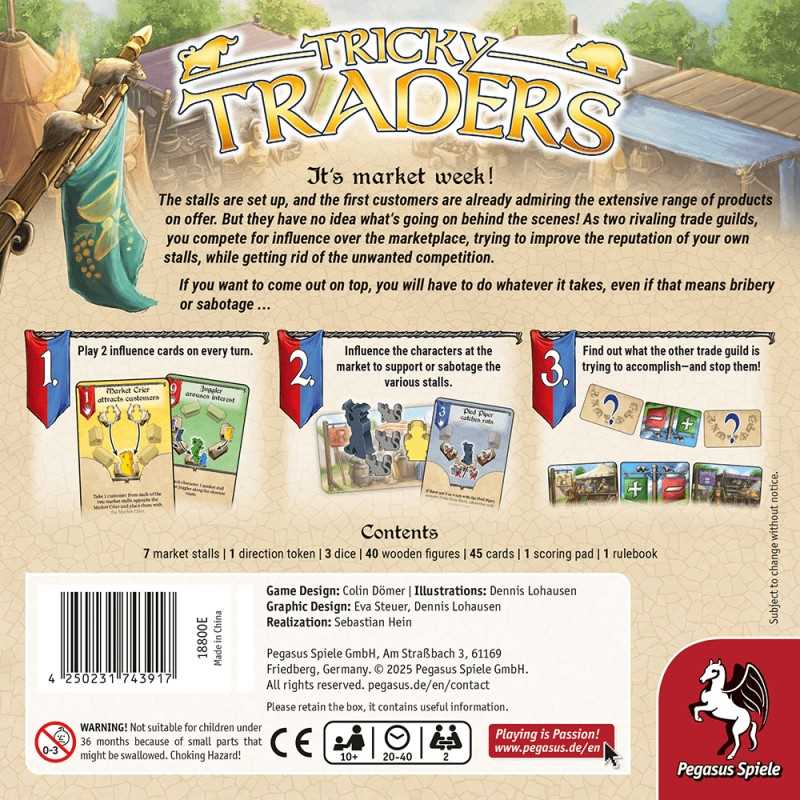
Tricky Traders - Competitive Two-Player Board Game, Ages 10+, by Pegasus SpieleIn Tricky Traders, two players compete to influence a lively marketplace filled with customers, rats, and rival characters. Each player moves pieces between seven stalls, using the activity around the market to create opportunities and disrupt the plans of the opposing player. The crowded market makes underhand tactics possible. Players must weigh each move carefully, manipulating the flow of visitors and characters while attempting to improve their own position and interfere with their opponent’s plans. The result is a focused two-player contest combining tactical movement, observation, and opportunistic play. Tricky Traders is a strategic head-to-head board game designed for two players, featuring a compact boxed game suitable for dedicated game nights.19,39 £*Shipping: 3,95 £Secure redirect to the provider
-
What is an example of non-competitive inhibition?
An example of non-competitive inhibition is the binding of an allosteric inhibitor to an enzyme at a site other than the active site. This binding causes a conformational change in the enzyme, which reduces its activity and prevents the substrate from binding to the active site. This type of inhibition does not compete with the substrate for binding to the active site, hence the term "non-competitive." An example of this is the binding of ATP to the enzyme phosphofructokinase in glycolysis, which inhibits its activity. **
-
Can you give me an example of competitive and non-competitive inhibition in biology?
Sure! In competitive inhibition, a molecule similar in structure to the substrate competes with the substrate for the active site of the enzyme. This prevents the substrate from binding to the enzyme and carrying out its normal function. An example of this is the drug statins, which competitively inhibit the enzyme HMG-CoA reductase, involved in cholesterol synthesis. In non-competitive inhibition, a molecule binds to the enzyme at a location other than the active site, causing a conformational change in the enzyme that reduces its activity. An example of this is the poison cyanide, which non-competitively inhibits the enzyme cytochrome c oxidase in the electron transport chain, disrupting cellular respiration. **
-
Is allosteric inhibition the same as non-competitive inhibition?
Allosteric inhibition and non-competitive inhibition are not the same, although they are related. Non-competitive inhibition refers to the binding of an inhibitor to a site on the enzyme that is not the active site, thereby preventing the substrate from binding to the active site. Allosteric inhibition, on the other hand, occurs when an inhibitor binds to a site on the enzyme that is distinct from the active site, causing a conformational change in the enzyme that reduces its activity. While both types of inhibition involve the binding of an inhibitor to a site other than the active site, allosteric inhibition specifically involves a change in the enzyme's shape and activity. **
-
What is the difference between non-competitive and allosteric inhibition?
Non-competitive inhibition occurs when an inhibitor binds to an enzyme at a site other than the active site, causing a conformational change that prevents the substrate from binding. This type of inhibition is not affected by the concentration of the substrate. On the other hand, allosteric inhibition occurs when an inhibitor binds to an allosteric site on the enzyme, causing a conformational change that reduces the enzyme's activity. Allosteric inhibition is often reversible and can be overcome by increasing the concentration of the substrate. **
* All prices are inclusive of VAT and, if applicable, plus shipping costs. The offer information is based on the details provided by the respective shop and is updated through automated processes. Real-time updates do not occur, so deviations can occur in individual cases. ** Note: Parts of this content were created by AI.