Buy facepages.eu ?
We are moving the project
facepages.eu .
Are you interested in purchasing the domain
facepages.eu ?
domain@kv-gmbh.de · 0541-91531010
Buy facepages.eu ?
What are conjunctional clauses, relative clauses, demonstrative clauses, and infinitive clauses?
Conjunctional clauses are dependent clauses that are introduced by a conjunction, such as "because," "although," or "while." They provide additional information about the main clause in a sentence. Relative clauses are also dependent clauses that provide more information about a noun in the main clause. They are introduced by relative pronouns like "who," "which," or "that." Demonstrative clauses are dependent clauses that function as adjectives and provide more information about a noun in the main clause. They are introduced by demonstrative pronouns like "this," "that," "these," or "those." Infinitive clauses are dependent clauses that are formed with an infinitive verb (to + base form of the verb). They can function as nouns, adjectives, or adverbs in a sentence. **
Are conjunctive clauses always adverbial clauses?
No, conjunctive clauses are not always adverbial clauses. While adverbial clauses are a type of conjunctive clause that function as adverbs to modify verbs, adjectives, or other adverbs, there are also other types of conjunctive clauses. For example, there are conjunctive clauses that function as noun clauses, such as in "I know that you are busy." In this sentence, "that you are busy" is a conjunctive clause functioning as a noun clause, not an adverbial clause. Therefore, conjunctive clauses can serve various grammatical functions beyond just adverbial clauses. **


Similar search terms for Clauses
Top-Angebote
Products related to Clauses:
-
Headline James Acaster's Guide to Quitting Social MediaTHE SUNDAY TIMES BESTSELLERThis is a self-help book like no other. Because you are not helping yourself, James Acaster is helping you.In 2019, James quit all forms of social media - covering his phone in tar and driving it to a lock-up in Rhyl, before setting up home in a castle he'd built himself called Castle Anti-Net. But when the withdrawal symptoms hit him, he realised in order to stay clean he'd have to replace everything social media gave him with three-dimensional, real-life activities.Employing the help of a mysterious, wealthy benefactor named Clancy Dellahue, and an ever-growing gang of misfits (aka the Tangfastic Crew), James found ways to replace his online friends (he joined the scouts) and spy on his exes (climbing ropes, zip lines, fake moustache) as well as anonymously bullying strangers, seeing photos of everyone's dogs, getting public figures fired, arguing with everybody about everything, and so much more.His life is amazing and yours could be too if you buy JAMES ACASTER'S GUIDE TO QUITTING SOCIAL MEDIA, BEING THE BEST YOU YOU CAN BE AND SAVING YOURSELF FROM LONELINESS VOL. 1.15,99 £*Shipping: 2,99 £Secure redirect to the provider
-
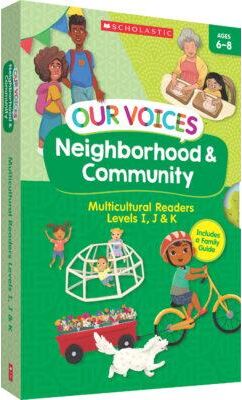
Our Voices: Neighborhood & Community Boxed SetFoster a feeling of belonging while building key reading skills with these colorful storybooks that spotlight a variety of neighborhoods and communities. The 10 charming stories feature characters from different cultural backgrounds who learn about...32,37 $*Shipping: 0,00 $Secure redirect to the provider
-
Fourth Estate The List by Yomi Adegoke - Sunday Times Bestseller - Paperback - Contemporary Social Media ThrillerThe List by Yomi Adegoke is a contemporary fiction novel published by Fourth Estate. It's a gripping thriller about reputation, betrayal, and the dark side of social media. The story follows high-flying journalist Ola Olajide as her seemingly perfect life unravels a month before her wedding, when an anonymous list resurfaces online with devastating consequences for her and her fiancé. The novel explores themes of identity, relationships, and the power of social media. A rising career, a loving fiancé, and a wedding just weeks away - Ola's life is turned upside down when she and her fiancé wake to the same unsettling message: 'Oh my god, have you seen The List?' A viral, anonymous document naming men accused of sexual misconduct has resurfaced online - and Michael's name is on it. As the countdown to the wedding continues, Ola is forced to confront the dark secrets of her fiancé and the true nature of their relationship.3,99 £*Shipping: 2,99 £Secure redirect to the provider
-
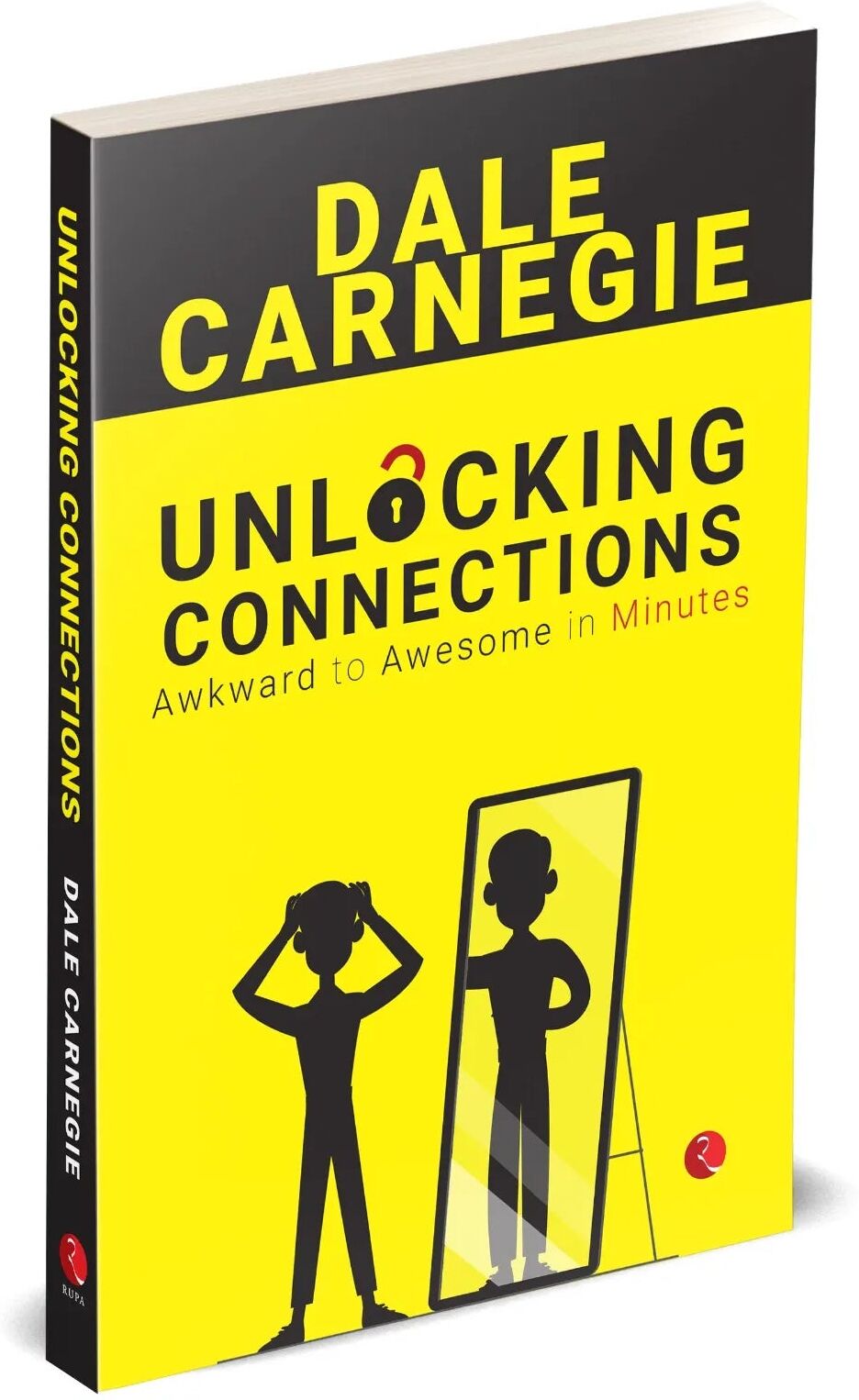
Rupa Publications India Unlocking Connections: Awkward to Awesome in Minutes by Dale Carnegie - Paperback Self-Help Book on Social Skills & Confidence - NewUnlocking Connections: Awkward to Awesome in Minutes is a practical self-help guide for anyone who finds social interactions daunting. Drawing on the enduring principles popularised by Dale Carnegie, this book breaks down the barriers that stop us forming genuine relationships, replacing awkwardness with confidence. Through clear, actionable advice, real-life case studies and simple exercises, readers are guided step by step towards more natural, meaningful conversations and lasting connections, both socially and professionally. Social interactions can feel like a minefield, but this book sets out to change that. It tackles the everyday hurdles that make conversations awkward, from misreading body language to freezing up in unfamiliar company. The book covers everything from understanding different personality types to overcoming phobias and building confidence in social situations.2,99 £*Shipping: 2,99 £Secure redirect to the provider


-
What are relative clauses and conjunctional clauses?
Relative clauses are clauses that provide additional information about a noun in the main clause. They are introduced by relative pronouns such as "who," "which," "that," and "whom." For example, in the sentence "The book that I read is very interesting," the relative clause "that I read" provides more information about the noun "book." Conjunctional clauses, on the other hand, are clauses that are connected to the main clause by conjunctions such as "and," "but," "or," "if," and "because." They can express relationships such as addition, contrast, alternative, condition, and cause. For example, in the sentence "I will go to the park if the weather is nice," the conjunctional clause "if the weather is nice" expresses a condition for the action in the main clause. **
-
What are the French conditional clauses (si-clauses)?
French conditional clauses, also known as si-clauses, are used to express a hypothetical situation and its potential outcome. They consist of two parts: the si clause (if clause), which describes the condition, and the main clause, which describes the potential result. The si clause is typically formed using the conjunction "si" followed by the imperfect tense or the pluperfect tense, while the main clause is formed using the conditional tense. These clauses are commonly used to talk about what would happen in certain situations if a specific condition were met. **
-
How can adverbial clauses be used as subordinate clauses?
Adverbial clauses can be used as subordinate clauses to provide additional information about the main clause. They can modify the verb in the main clause by expressing time, place, manner, condition, reason, purpose, or concession. For example, in the sentence "She went to bed after she finished her homework," the adverbial clause "after she finished her homework" provides information about the timing of the main action "She went to bed." Adverbial clauses are introduced by subordinating conjunctions such as after, before, while, since, because, if, although, etc. **
-
How can subordinate clauses be rewritten as main clauses?
Subordinate clauses can be rewritten as main clauses by removing the subordinating conjunction and making any necessary adjustments to the verb tense or word order. For example, the subordinate clause "because she was tired" can be rewritten as the main clause "she was tired." This transformation allows the subordinate clause to stand alone as a complete sentence. Additionally, any pronouns or other words that were dependent on the subordinating conjunction may need to be adjusted to ensure the new main clause is grammatically correct. **


How can one recognize main clauses and subordinate clauses?
Main clauses can stand alone as complete sentences, while subordinate clauses cannot. Subordinate clauses often begin with subordinating conjunctions such as "although," "because," "if," "when," or "while." They also often contain a subject and a verb, but they do not express a complete thought on their own. Main clauses, on the other hand, express a complete thought and can function as independent sentences. By identifying these characteristics, one can recognize main and subordinate clauses in a sentence. **
How do I transform subordinate clauses into main clauses?
To transform a subordinate clause into a main clause, you need to make sure that the clause can stand alone as a complete sentence. This means adding a subject and a verb to the clause if it doesn't already have them. You may also need to adjust the word order or add any necessary punctuation. Once these changes are made, the subordinate clause will become a main clause that can function independently within a sentence. **
Top-Angebote
Products related to Clauses:
-
Enesco/Dept 56 More Letters for the Clauses Clothtique Red , RedEvery year, Mr. and Mrs. Claus are eager to receive and read More Letters for the Clauses. The red mailbox has holiday accents including holly leaves, red berries, and a red bow; it is filled with wrapped packages and rolled-up letters. This happy...149,99 $*Shipping: 20,95 $Secure redirect to the provider
-
Enesco/Dept 56 More Letters for the Clauses African American Clothtique Red , RedEvery year, Mr. and Mrs. Claus are eager to receive and read More Letters for the Clauses. The red mailbox has holiday accents including holly leaves, red berries, and a red bow; it is filled with wrapped packages and rolled-up letters. This happy,...149,99 $*Shipping: 20,95 $Secure redirect to the provider
-
Headline James Acaster's Guide to Quitting Social MediaTHE SUNDAY TIMES BESTSELLERThis is a self-help book like no other. Because you are not helping yourself, James Acaster is helping you.In 2019, James quit all forms of social media - covering his phone in tar and driving it to a lock-up in Rhyl, before setting up home in a castle he'd built himself called Castle Anti-Net. But when the withdrawal symptoms hit him, he realised in order to stay clean he'd have to replace everything social media gave him with three-dimensional, real-life activities.Employing the help of a mysterious, wealthy benefactor named Clancy Dellahue, and an ever-growing gang of misfits (aka the Tangfastic Crew), James found ways to replace his online friends (he joined the scouts) and spy on his exes (climbing ropes, zip lines, fake moustache) as well as anonymously bullying strangers, seeing photos of everyone's dogs, getting public figures fired, arguing with everybody about everything, and so much more.His life is amazing and yours could be too if you buy JAMES ACASTER'S GUIDE TO QUITTING SOCIAL MEDIA, BEING THE BEST YOU YOU CAN BE AND SAVING YOURSELF FROM LONELINESS VOL. 1.15,99 £*Shipping: 2,99 £Secure redirect to the provider
-
Our Voices: Neighborhood & Community Boxed SetFoster a feeling of belonging while building key reading skills with these colorful storybooks that spotlight a variety of neighborhoods and communities. The 10 charming stories feature characters from different cultural backgrounds who learn about...32,37 $*Shipping: 0,00 $Secure redirect to the provider
-
What are conjunctional clauses, relative clauses, demonstrative clauses, and infinitive clauses?
Conjunctional clauses are dependent clauses that are introduced by a conjunction, such as "because," "although," or "while." They provide additional information about the main clause in a sentence. Relative clauses are also dependent clauses that provide more information about a noun in the main clause. They are introduced by relative pronouns like "who," "which," or "that." Demonstrative clauses are dependent clauses that function as adjectives and provide more information about a noun in the main clause. They are introduced by demonstrative pronouns like "this," "that," "these," or "those." Infinitive clauses are dependent clauses that are formed with an infinitive verb (to + base form of the verb). They can function as nouns, adjectives, or adverbs in a sentence. **
-
Are conjunctive clauses always adverbial clauses?
No, conjunctive clauses are not always adverbial clauses. While adverbial clauses are a type of conjunctive clause that function as adverbs to modify verbs, adjectives, or other adverbs, there are also other types of conjunctive clauses. For example, there are conjunctive clauses that function as noun clauses, such as in "I know that you are busy." In this sentence, "that you are busy" is a conjunctive clause functioning as a noun clause, not an adverbial clause. Therefore, conjunctive clauses can serve various grammatical functions beyond just adverbial clauses. **
-
What are relative clauses and conjunctional clauses?
Relative clauses are clauses that provide additional information about a noun in the main clause. They are introduced by relative pronouns such as "who," "which," "that," and "whom." For example, in the sentence "The book that I read is very interesting," the relative clause "that I read" provides more information about the noun "book." Conjunctional clauses, on the other hand, are clauses that are connected to the main clause by conjunctions such as "and," "but," "or," "if," and "because." They can express relationships such as addition, contrast, alternative, condition, and cause. For example, in the sentence "I will go to the park if the weather is nice," the conjunctional clause "if the weather is nice" expresses a condition for the action in the main clause. **
-
What are the French conditional clauses (si-clauses)?
French conditional clauses, also known as si-clauses, are used to express a hypothetical situation and its potential outcome. They consist of two parts: the si clause (if clause), which describes the condition, and the main clause, which describes the potential result. The si clause is typically formed using the conjunction "si" followed by the imperfect tense or the pluperfect tense, while the main clause is formed using the conditional tense. These clauses are commonly used to talk about what would happen in certain situations if a specific condition were met. **
Similar search terms for Clauses
-
Fourth Estate The List by Yomi Adegoke - Sunday Times Bestseller - Paperback - Contemporary Social Media ThrillerThe List by Yomi Adegoke is a contemporary fiction novel published by Fourth Estate. It's a gripping thriller about reputation, betrayal, and the dark side of social media. The story follows high-flying journalist Ola Olajide as her seemingly perfect life unravels a month before her wedding, when an anonymous list resurfaces online with devastating consequences for her and her fiancé. The novel explores themes of identity, relationships, and the power of social media. A rising career, a loving fiancé, and a wedding just weeks away - Ola's life is turned upside down when she and her fiancé wake to the same unsettling message: 'Oh my god, have you seen The List?' A viral, anonymous document naming men accused of sexual misconduct has resurfaced online - and Michael's name is on it. As the countdown to the wedding continues, Ola is forced to confront the dark secrets of her fiancé and the true nature of their relationship.3,99 £*Shipping: 2,99 £Secure redirect to the provider
-
Rupa Publications India Unlocking Connections: Awkward to Awesome in Minutes by Dale Carnegie - Paperback Self-Help Book on Social Skills & Confidence - NewUnlocking Connections: Awkward to Awesome in Minutes is a practical self-help guide for anyone who finds social interactions daunting. Drawing on the enduring principles popularised by Dale Carnegie, this book breaks down the barriers that stop us forming genuine relationships, replacing awkwardness with confidence. Through clear, actionable advice, real-life case studies and simple exercises, readers are guided step by step towards more natural, meaningful conversations and lasting connections, both socially and professionally. Social interactions can feel like a minefield, but this book sets out to change that. It tackles the everyday hurdles that make conversations awkward, from misreading body language to freezing up in unfamiliar company. The book covers everything from understanding different personality types to overcoming phobias and building confidence in social situations.2,99 £*Shipping: 2,99 £Secure redirect to the provider
-
GE Profile™ GE Profile Opal Mini Nugget Ice MakerBuilt on the belief that modern life needs modern solutions, GE Profile Appliances are designed to make daily life simpler by incorporating Smart Home technology and cutting-edge features in every appliance.299,00 $*Shipping: 0,00 $Secure redirect to the provider
-
Drop Dash Deals Waterproof Electrical Wire Cable Snap Connectors For Secure, Reliable Connections Waterproof Electrical Wire Cable Snap Connectors For Secure, Reliable ConnectionsLooking for a simple, efficient solution to keep your electrical connections secure These 50 pcs Waterproof Electrical Wire Cable Snap Connectors are designed for easy, reliable use in various electrical installations. Made with durable,...49,97 $*Shipping: 0,00 $Secure redirect to the provider
-
How can adverbial clauses be used as subordinate clauses?
Adverbial clauses can be used as subordinate clauses to provide additional information about the main clause. They can modify the verb in the main clause by expressing time, place, manner, condition, reason, purpose, or concession. For example, in the sentence "She went to bed after she finished her homework," the adverbial clause "after she finished her homework" provides information about the timing of the main action "She went to bed." Adverbial clauses are introduced by subordinating conjunctions such as after, before, while, since, because, if, although, etc. **
-
How can subordinate clauses be rewritten as main clauses?
Subordinate clauses can be rewritten as main clauses by removing the subordinating conjunction and making any necessary adjustments to the verb tense or word order. For example, the subordinate clause "because she was tired" can be rewritten as the main clause "she was tired." This transformation allows the subordinate clause to stand alone as a complete sentence. Additionally, any pronouns or other words that were dependent on the subordinating conjunction may need to be adjusted to ensure the new main clause is grammatically correct. **
-
How can one recognize main clauses and subordinate clauses?
Main clauses can stand alone as complete sentences, while subordinate clauses cannot. Subordinate clauses often begin with subordinating conjunctions such as "although," "because," "if," "when," or "while." They also often contain a subject and a verb, but they do not express a complete thought on their own. Main clauses, on the other hand, express a complete thought and can function as independent sentences. By identifying these characteristics, one can recognize main and subordinate clauses in a sentence. **
-
How do I transform subordinate clauses into main clauses?
To transform a subordinate clause into a main clause, you need to make sure that the clause can stand alone as a complete sentence. This means adding a subject and a verb to the clause if it doesn't already have them. You may also need to adjust the word order or add any necessary punctuation. Once these changes are made, the subordinate clause will become a main clause that can function independently within a sentence. **
* All prices are inclusive of VAT and, if applicable, plus shipping costs. The offer information is based on the details provided by the respective shop and is updated through automated processes. Real-time updates do not occur, so deviations can occur in individual cases. ** Note: Parts of this content were created by AI.